 Real WSPR data
 Prepared examples
 Step-by-step guidance

RX Benchmark
Which of my receive setups hears better?
Compare two receive chains, such as different antennas or preamps. Use ΔSNR to compare matched signal quality and ΔDecode to compare what each setup decodes.
Turn WSPR spots
into real insights.
Understand and compare your ham radio station with global WSPR data — easily, and for free.

GUIDED DEMOS
Choose a real experiment, follow the evidence, and learn how to read your own station’s results.
No station needed · No installation
Which of my receive setups hears better?
Compare two receive chains, such as different antennas or preamps. Use ΔSNR to compare matched signal quality and ΔDecode to compare what each setup decodes.
Which transmit setup is heard better?
Compare two transmitters using reports from the same receivers in the same WSPR cycles. Use ΔSNR to compare matched signal quality and ΔDecode to compare which transmissions get decoded.
What can my station hear, and how consistently?
Explore which stations you hear, and how reception changes across direction, distance and time. Inspect SNR, Decode Rate and detailed station evidence to evaluate reception patterns.
Where is my signal heard, and how reliably?
See which stations hear you, and how reception changes across direction, distance and time. Inspect SNR, Decode Rate and detailed station evidence to see how widely your signal is decoded.
RX is receiving. TX is transmitting. Benchmark compares two setups; Performance explores one station without a Reference.
New to WSPRadar? Start with the recommended demo, or choose the question closest to yours.
Direction and distance
G3ZIL / G4HZX
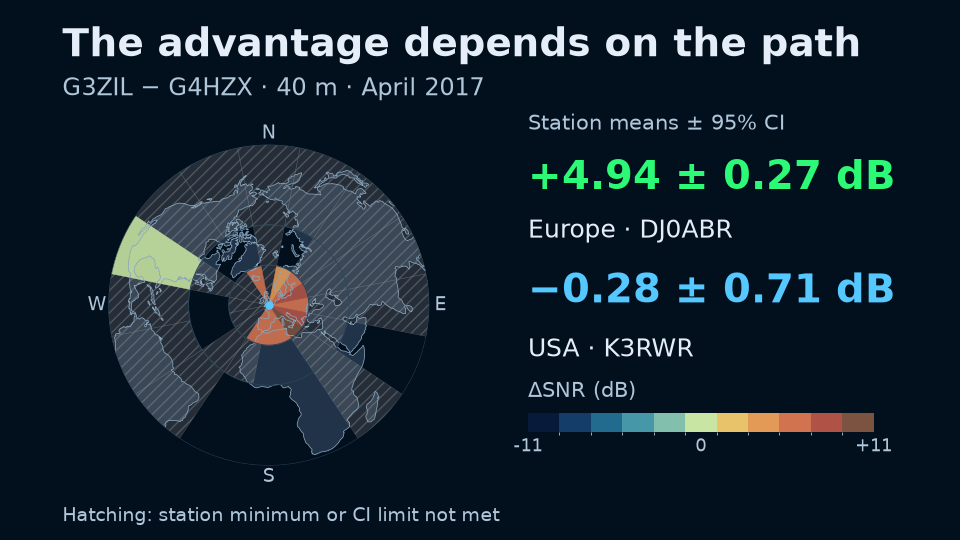
Does better signal quality also mean more signals decoded?
The signal-margin trade-off
SK0WE/P / SK0WE/1
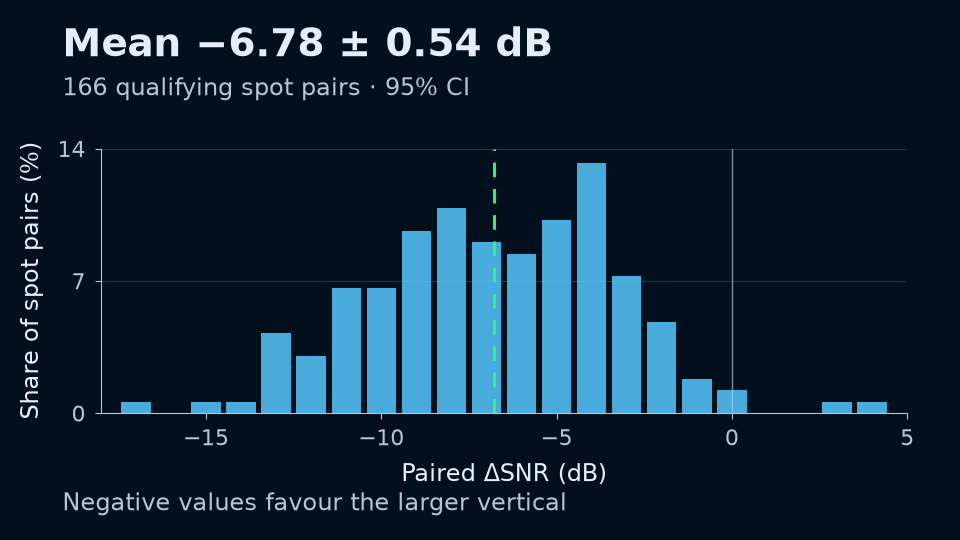
How much signal margin do you trade for portability?
Reception by UTC hour
G3ZIL
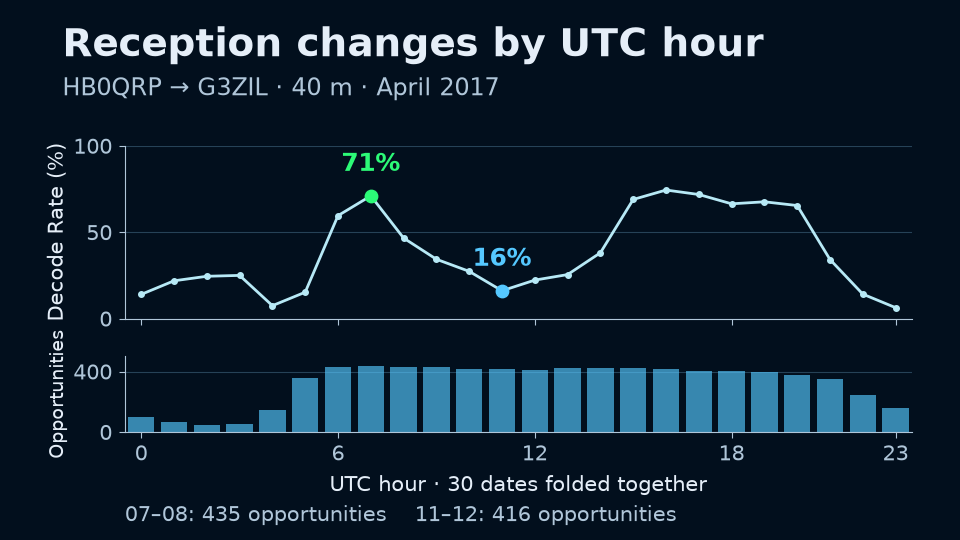
What can one receiver hear—and how consistently?
Receiver calibration
ON4AWM0 / ON4AWM1
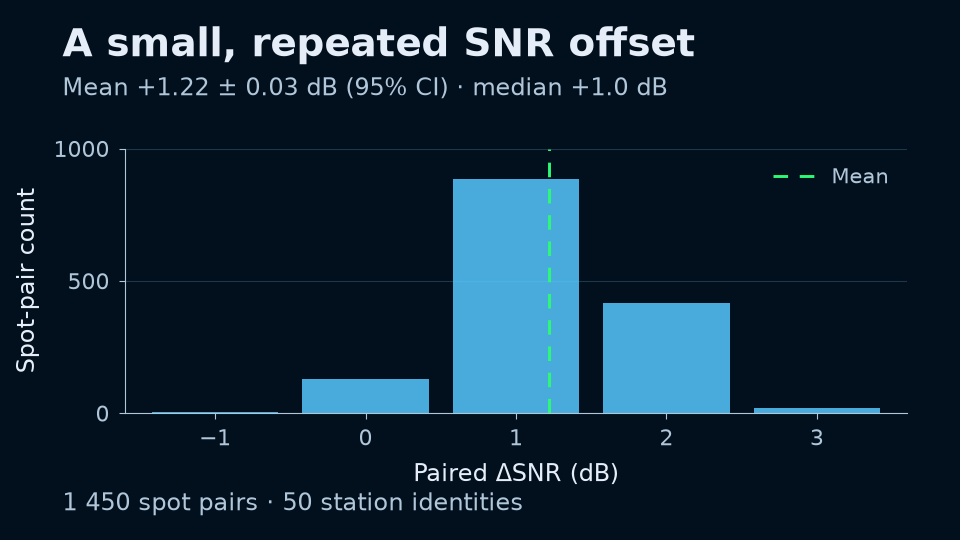
Could the receiving equipment explain part of the difference?
Following a setup change
ON4AWM0 / ON4AWM1
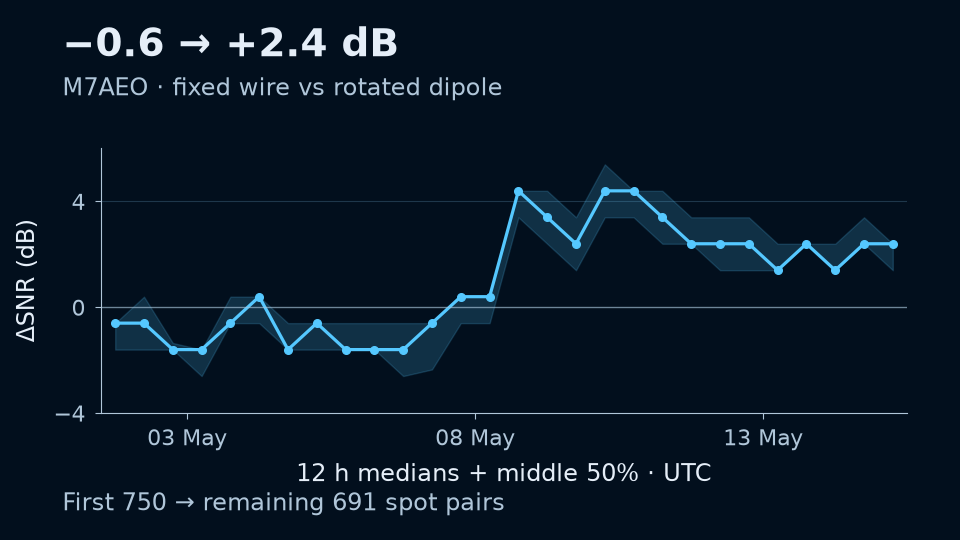
Can you see an antenna rotation in the reception data?
From source reports to valid pairs
KP4MD / WB6RQN
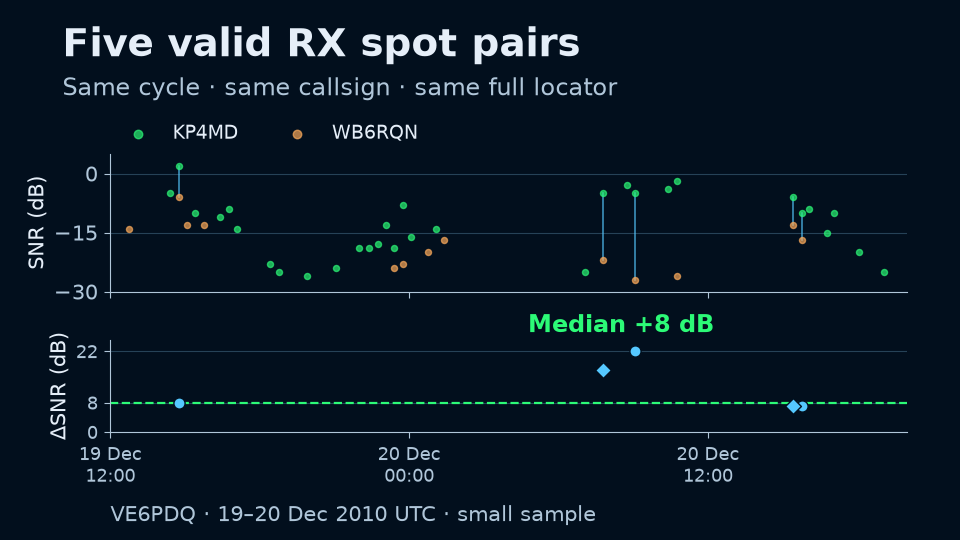
What makes two WSPR reports a valid comparison?
The Milazzo guide covers both RX and TX Benchmark and appears in both selections.
Take what you learned to your station. Choose your question, plan the setup, and use the same views to examine your results.